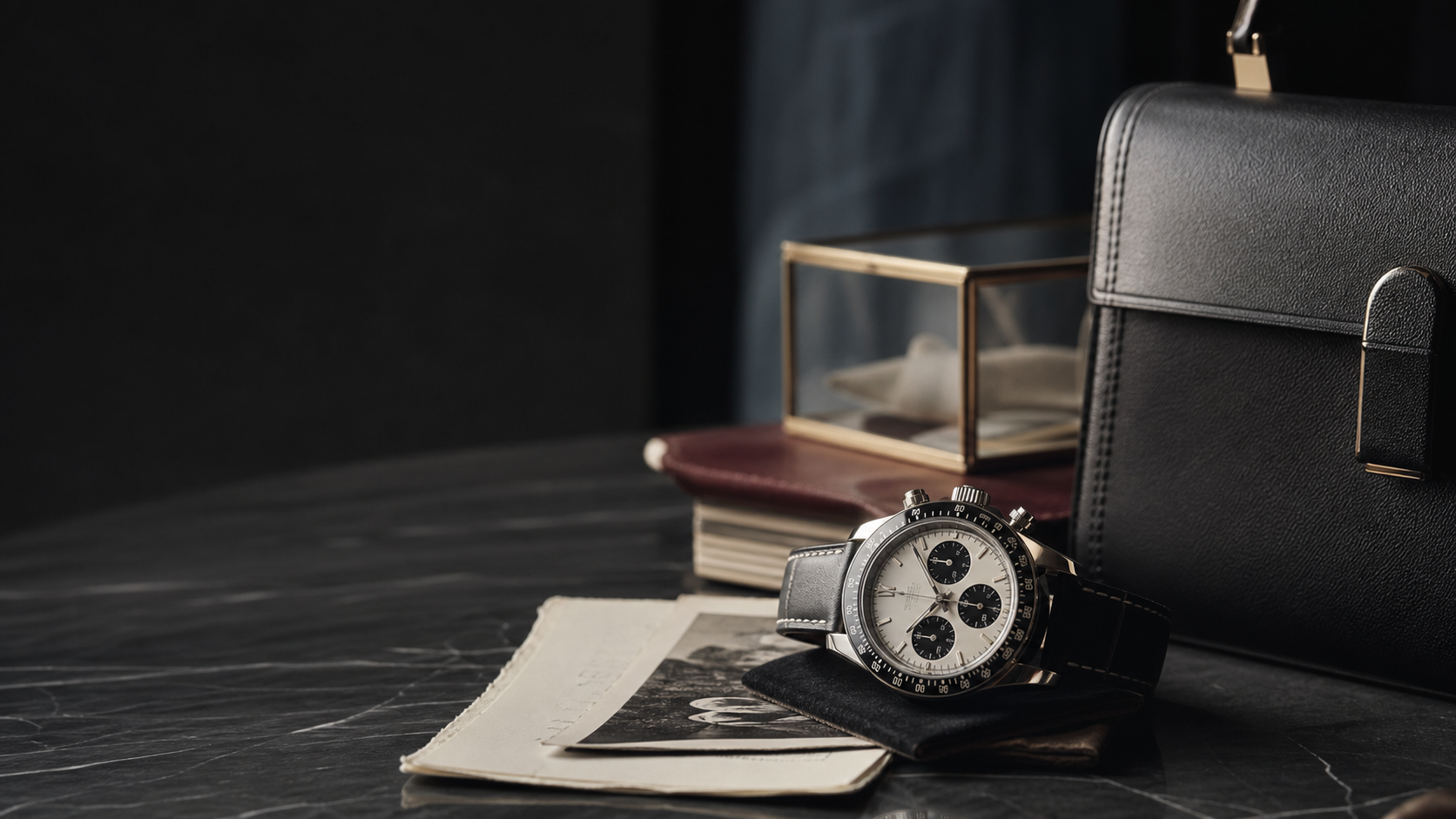
The Daytona has survived because it is more than a trophy watch. At its best, it is a compact lesson in proportion: a chronograph that looks busy in theory but balanced on the wrist, with enough motorsport mythology to give the design emotional gravity.
The model matters because it connects tool-watch history, celebrity collecting, limited supply, and decades of subtle design evolution. Readers should understand the difference between admiring the silhouette and assuming every reference is equally desirable.
Buying context starts with condition, service history, dial originality, bracelet stretch, box and paper provenance, and whether the premium is attached to a specific reference or simply the name. New buyers should study multiple completed sales before treating any asking price as market truth.
Care is mostly about restraint: avoid unnecessary polishing, keep service records, insure the piece, and learn how water resistance changes with age. A Daytona can be worn, but it should not be treated casually just because the design began as a sports watch.
Luxmode treats evergreen luxury guides as living references. Dates on this page reflect real publication and update activity, and the editorial team reviews source notes before expanding or revising recommendations.